Showing posts with label education. Show all posts

Sunday, November 2, 2008

What we need to do NEXT Part 4

This is the fourth part of my massive essay, "What we need to do NEXT." For the previous three parts, read them below.


Education

In the 1960’s, the average college graduate had little debt when given their diploma. Most of their education was funded through grants or the GI Bill. Now, most students graduate with a minimum of $30,000 in debt, usually more. Most of the funds spent on tuition and books come from loans. This needs to end. With credit becoming scarcer, we need to start funding our higher education. This is where fortunes are started, through education. Businesses cannot produce good products without well educated people. Government doesn’t work well without well educated people. Money spent on education is not lost, it is invested, and we need to start treating it this way, instead of treating it like it’s money thrown down a well.

We need to support our troops by giving them a free education. Honestly, how can we say that we are supporting them when in fact all of the funds they are getting for education right now are a part of their pay? We need to do more for those who would sacrifice themselves for us.

Money paid into colleges also helps our country by supporting basic research. The more basic research that is done, the more our industry benefits and the more jobs that are created.

For primary education, we need to start the reforms by paying our teachers better. The starting pay for an elementary school teacher in California is about $24,000. That’s nothing. Two teachers together aren’t making $50,000 per year. That needs to be changed dramatically. You absolutely can’t get a first-rate education from someone who can’t survive on their pay, let alone pay off their college debt. It’s scandalous.

After doing this, we need to reform our textbooks, and how they are written and chosen. History text books are written as propaganda pieces, and chosen based on how much they project the way we wish our country had been, not on actual history. That’s nuts. Let our kids know what has happened in our country, or they might make some kind of dumb mistake, like allowing a depression to happen again.

None of this is optional. If we refuse to do these reforms we have in effect decided that our country will fade away into history.

Sunday, September 21, 2008

The Current Financial Situation, and Some Solutions

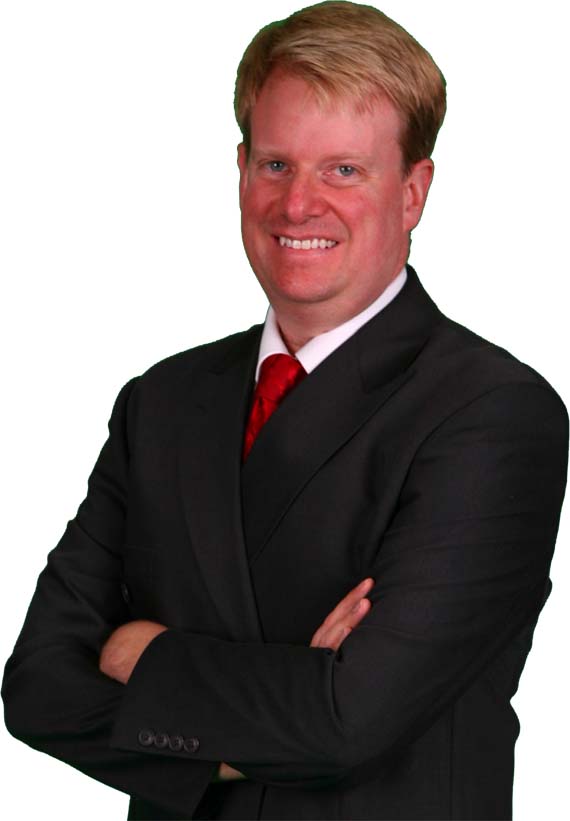
By Ed Smallwood

Yesterday I was watching CNN. Connecticut Democratic Senator Chris Dodd was being interviewed, I can’t remember who it was that was asking the questions. What stuck out in the interview was what he said about a closed-door briefing the Senate got from Federal Reserve Chairman Ben Bernanke. He wouldn’t comment on the exact content, after all it wouldn’t be terribly useful to keep the information in a closed-door briefing if it was all going to become public immediately afterward. What Senator Dodd said was that after Mr. Bernanke was done talking, there was stunned silence for 10-15 seconds in the room.

That’s significant. It’s also very frightening, either way you look at it.
I have known for some time that things were going very wrong with the economy. I remember an interview last March with Paul Krugman in Fortune magazine where he said that he thought we would hit 6-7 Trillion Dollars in capital losses in the housing industry this year, a 25% reduction in equity throughout the United States. That is what we are just beginning to see right now. Congress is talking about an 800 Billion Dollar bailout. You can see that what Congress is talking about is roughly an order of magnitude too small to cover what Paul Krugman was talking about. In short, 88% of the losses aren’t being addressed by Congress.

Now, we also have to take into account that the International Monetary Fund is estimating our GDP at roughly 13 Trillion Dollars. The losses we are talking about are more than half of the Gross Domestic Product of the entire United States. Nobody alive has ever faced a financial disaster of this magnitude.

Is that what Chairman Ben Bernanke was telling the Senators in that closed-door briefing? Numbers so large that it stunned veteran Senators into silence? I think that’s exactly what happened.

Here’s the real problem: The simple answer to this problem was to avoid deregulating the banking industry in the first place. Don’t let this debacle happen. Unfortunately several years ago the “Regulation is Bad for the Economy” branch of the Republican party got it’s way, with Senator John McCain cheering it on. The easy and simple answers to this problem are all gone now. There is no choice but to see our economy slide downward. It’s simply too late to prevent that.

So, what do we do now?

We’re going to have to bail out Wall Street. We don’t have a choice about this. That’s what Congress is doing to some extent now. The problem with how they are doing it is that they are diluting the shares that investors have by taking majority stakes of the companies they are bailing out and putting it under Government control. They are allowing the investors a chance to keep some of the value, but not most of it. This is unlikely to work in the long term. People’s retirement savings are going to suffer, even though it isn’t as much as they could. In short, the government is bailing out the executives of the companies more than the investors.

The landscape for homeowners is even bleaker. Nothing whatsoever has been done to address their concerns. Foreclosures are happening at an even greater pace than before. More properties are going “upside down” in value than they were before, and the Santa Clara County Association of REALTORS is estimating that this will be the case until at least 2010. Some estimates I have been reading put it at 2012 or later.

Now, with it harder than ever to declare bankruptcy (thank you Republicans,) and savings evaporating, the backbone of the American Economy, the Consumer, has almost no money to buy anything. We can see this through the fact that spending is decreasing while savings are simultaneously decreasing. Until something is done to address the concerns of the average person on the street, the economy can do nothing but spiral downward at an ever increasing rate.

This is where we stand now.

What are we going to have to do?

We are going to have to make peace with the fact that our economy is going to crash first of all. We can’t prevent it. Next, we have to do what we can to prevent it from crashing so bad that it can’t recover. This is a real possibility. There is nothing magical about the economy of the United States. Other countries in a similar state that did nothing saw their economies die outright. Most of them are third-world countries now, or failed states. That’s the danger.

We have to bring back the regulations that prevented this problem from happening decades ago. This is an absolute must. Doing any less than this means that nobody will trust banks enough to loan them money to make loans. That’s how the system works. Without that key part the system collapses and doesn’t recover.

We have to protect the money of the average person as much as possible right now. We can’t expect someone to pay back a bad mortgage at an ever increasing rate for the rest of their lives, tying up their spending power in servicing bad debt just because some company got greedy. If these homeowners decide to allow the banks to foreclose, they will find it harder to buy another home later. The inventory of foreclosed homes will increase, because there will be fewer qualified buyers (you can’t have a foreclosure in at least the last 2 years to qualify for a home loan). This is dangerous in several ways. First, unoccupied homes bring down property values. Second, they are fire dangers. Houses are fuel. If you have enough of them you can end up with a wildfire in the middle of a city. Oakland can tell you why this is bad.

This means we have to do at least one of two things, probably both: we will have to forgive at least part of the bad debt to keep people in their homes, or we will have to allow people with foreclosures on their record to get credit anyway. The former is preferable, and while the FHA is doing this to a small extent, the program needs to be massively expanded. The latter solution will probably have to be put into effect as well. Why should we do this? Why not let the people who took out these loans just hang? If we allow our spite to get ahead of our pity (or self interest), making sure these people pay back their loans, our economy suffers from having too little money left over to buy the things that we sell. All of us suffer if we make any one segment of the population suffer too much.

In addition, we really need to start working on our infrastructure, and I don’t mean just roads, bridges, ports, electricity grid, and communications grid. I mean the workforce as well. For most of my life we have seen a growing battle against the workforce. McCain’t has been talking a big game over how strong our workforce is, but the reality is he has actively been working on weakening it.

The big secret that allows the American economy to be so strong has been our educational system. Public education was invented here. We have expanded it ever sense the Brotherhood of Friends (often referred to as “The Quakers”) introduced the concept. All of my life the Republican Party has been trying to weaken it. Vouchers. Increasing tuition in Universities. Destruction of vocational schools. Even “No Child Left Behind” which is decreasing Federal funding to elementary schools. Recently when Democrats tried to bring back full tuition for all Iraq War Veterans, McCain’t voted against it. He said it would reduce the incentive for our Servicepeople to reenlist. This attitude is going to prevent our economy from recovering.

We need a top of the line communications grid to allow educated people to build products using electricity that will be shipped to the consumer through working ports and over working roads and bridges. If any one of those things isn’t working, our economy dies and stays that way.

Why wouldn’t our economy recover? Really, why would it? People with money are under no obligation to invest it in our country. If our economy is wrecked, they would be dumb to put good money after bad. They’ll invest it elsewhere, in economies that are booming. China is a good example. With no money being invested in our country, no educated people to design new products or services, a 20th century communications grid expected to help them design them, no energy to build them, and deteriorating ports, roads, and bridges to ship them our economy will stay sunk.

What we really need to get us through this crisis is a leader that believes in our future, not one that is trying to bring us back to a failed past, namely the “Roaring ‘20s.” Let’s all make sure we work toward our country’s future.

Links:

Fortune Magazine interview with Paul Krugman: March 17th, 2008 by Jia Lynn Yang http://money.cnn.com/2008/03/14/news/economy/krugman_subprime.fortune/index.htm

Tuesday, June 17, 2008

“Business as Usual” ends at home

By Ed Smallwood

For the past couple of years I have been publishing my thoughts online in the form of essays. One essay at a time, one thought at a time. They started out as a trickle that I would put on a MySpace page, and have in recent months turned into a virtual deluge (for me) that I have been posting anywhere I can from my personal blog to any news or commentary site I can find.

As I publish more, I’m noticing more people are responding to my thoughts. I have seen many messages, both public and private, from people that are very thoughtful. Those are the comments I cherish.

Some of my essays have been about what I think should be done to improve the world in some small way, whether it be improving the environment by modifying our behavior, to improving communications in this country by acknowledging a problem and fixing it. There is one response to these essays that I have gotten that has gotten me mad: “Not gonna happen.” It is a simple statement of belief, a resignation of what is. A surrender to the inevitable.

Although the people who make this statement may not realize it, it’s also lazy and a way of dodging personal responsibility. “Nothing is going to change, so I don’t have to do anything or feel guilty about it. I can safely sit here in front of my TV and criticize others about how bad things are.”

Every time this happens a lobbyist or legislator smiles. You can almost hear them: “You smell that? That’s apathy. I love the smell of apathy in the morning!”

I decided to ask myself why this thought process made me mad. Why should I be surprised that someone would think this way when, in fact, all of the evidence of the past 40 years or so completely backs them up?

For years we have been told by surveys that Americans are tired of “Business as Usual.” My loose working definition of “Business as Usual” is a government that doesn’t listen to its constituents, but listens very carefully to lobbyists for corporations and special interests. Distilled down to two words: “Money talks.”

So, if Americans are tired of “Business as Usual,” why is it usual? Why has it been usual? How could people put up with it for this long? It’s because true Democracy has not been considered important.

Democracy requires several things to work: Information, participation, consent. These aren’t just optional parts of a democracy, they are vital. For years television news has been our main source of information about our government. Newspapers have been shriveling on the vine from neglect. Newsmagazines used to be staples of the check-out line at supermarkets. Now they have been placed so far down on the racks I thought that they had been removed entirely until a few days ago when I nearly kicked one. The slots that used to be filled with Time, Newsweek, and U.S. News and World Reports have all been replaced by scandal sheets and entertainment magazines, with the newsmagazines being placed so low on the racks that they are below the eye-level of even the smallest child (certainly not their target readership.) “Who cares what’s happening in the real world?” these reformatted racks proclaim. “Read about what’s happening in the soap operas on your favorite television network instead!”

Through miseducation our democratic process has been limited much more than simply through our sources of information. “Get out there and vote!” we hear at this time of the election cycle. “Vote!” From some other people you will hear, “If you don’t know the issues, don’t vote!” The implication here is that democracy is simply about voting. You vote or you don’t vote. You vote for one pre-selected candidate or the other; for a proposition or against it. You can work on one candidate’s campaign, or the other, or stay away and choose from the comfort of your living room. That is all that is expected of you, and all of the communication that is wanted from you. All of civics reduced to a single paragraph. Complexities removed. “If you don’t like it, then stay home. We don’t want your opinion.”

There is a saying that I’m sure you’ve heard. It has been around since the founding of our country: “United we stand. Divided we fall.” Well, the citizenry of the United States has been divided up into a nation of individuals, and that’s why democracy is failing. Voter turnout falls when there is no perceived difference in the candidates. Choosing candidates is usually like going to an ice-cream store and being offered vanilla, vanilla bean, or French vanilla. Why is this? Because television networks allow the candidates to portray themselves this way. We are told that we have the choice between the candidate that has experience and will change the way things work, and the candidate that has less experience and will change the way things work. Has television really given us a history of what the candidates have done, or have the networks given the candidates carte blanc to redefine themselves in any way they want? After all, if the television networks want access to the candidates they can’t ask the hard questions.

This has been the way business in Washington has been conducted for decades, and will continue to be until we stop them. If you are waiting to elect someone who will end “Business as Usual,” you will wait forever and never see it end. This will not change from the top. It works much too well for the people that have been elected, as well as the corporations, lobbyists, and News Networks that got them elected. They currently have no motivation to change. As long as you are isolated, sitting comfortably in front of your TV, getting the news they want you to hear and limiting your involvement to voting periodically, they won’t change a thing. Oh, often you’ll hear them loudly talk about campaign finance reform, while messily gutting it out of public view.

The fact is that we cannot come to these people and ask them for meaningful reform. Especially if we are not willing to change ourselves.

You must be wondering by this point what it is that I am asking? Do I really expect people to get out of their couches and march? Do I expect people to start running for office? Should we all write our congresspeople? Should we blog?

I have an idea at this point. It is just the beginning of an idea, fragile and easily destroyed by apathy. If carefully nurtured it could bear the sweetest fruit. It is still very small and will require care to survive long enough, and we cannot do it separately and in isolation.

You see, it is easy to control individuals, to make them feel alone. It is difficult to control people in groups. I am not asking you to join a national organization. I am asking you to start a neighborhood group—a root level group. Some already exist, but many, many more are needed. Your group should get together as often as you reasonably can just to talk. You may want to set-up organized meetings, or unorganized bar-be-ques. You may have a stated agenda, or you may let anything come up as it will. However, you should be willing to get out of your house and go to these meetings, and host them yourself as you can. Do not be afraid to speak out! Let your voice be heard! And most importantly, let your group’s voice be heard. Don’t be afraid to get together as a group and let your representatives in local, state, or national government know how your group feels.

It is easy for a politician to ignore individuals, or categorize them broadly. It is much more difficult to ignore the opinions of a group of people, especially when they vote for your office. All of the lobbyist campeign money in the world is useless if your constituents refuse to vote for you.

My thought is that as these neighborhood groups should invite their representatives in the local, state, and national governments to come to meetings sponsored by these groups and talk to the people who live in the neighborhood. That way, people won’t be relying on news organizations to ask their representatives tough questions—they can ask them themselves. In addition, these neighborhood groups could make their concerns known to their elected representatives directly, instead of hoping that they are covered in some kind of opinion poll, or that their letters make it through the politician’s staffers. These groups may want to publish local newsletters that could be distributed online and to the door of their neighbors. They could endorse candidates who are responsive to the need of the neighborhood, and withhold endorsement of candidates that are not. Or, if neither option is palatable, you could always help one of your own members run for the office!

Also, groups of this kind could get together with other like-minded groups, and pool their resources to get better responses. Multiple groups around a city could work together to set up debates between candidates, or have round-table discussions.

More importantly, your children and grandchildren should see you doing this. It is important not just to participate in democracy, but to teach the next generation how to interact and to know what democracy looks like. Currently, most of them think it looks like talking heads on CNN or C-SPAN. Let them know real democracy looks like people talking to each other, not people talking at each other. Don’t let them be intimidated by elected officials—they’re just people who were elected to office.

While it is probably too late for this kind of organization to have much impact on the current election, it is certain to me that now is the right time to start organizing these groups for all of the elections in the future. Potential recruits for neighborhood groups are self-identifying at this time. How better to know if someone might be interested in joining than to look for signs emblazoned with the name of some politician sticking into someone’s lawn? Is that not an invitation to talk?

If we are to take back our government from the lobbyists and special interests, it is going to be through this kind of local change. By paying attention to our government and closely watching what is going on, we will counter all of that special interest money going into the campaign treasuries. That isn’t just the beginning of campaign finance reform--it’s the beginning of government reform. Most importantly it doesn’t require an act of Congress, it can’t be vetoed by the President, and it can’t be overturned by the Supreme Court. That is true Democracy.

If you are a patriot, a person who believes in the United States and spreading democracy, then you have no excuse for not starting a neighborhood political group or joining one that already exists. Now is the time. Join in real Democracy and do more than just vote.